The Wales Greyhound Racing Ban — What It Means for UK Tracks
 Available in US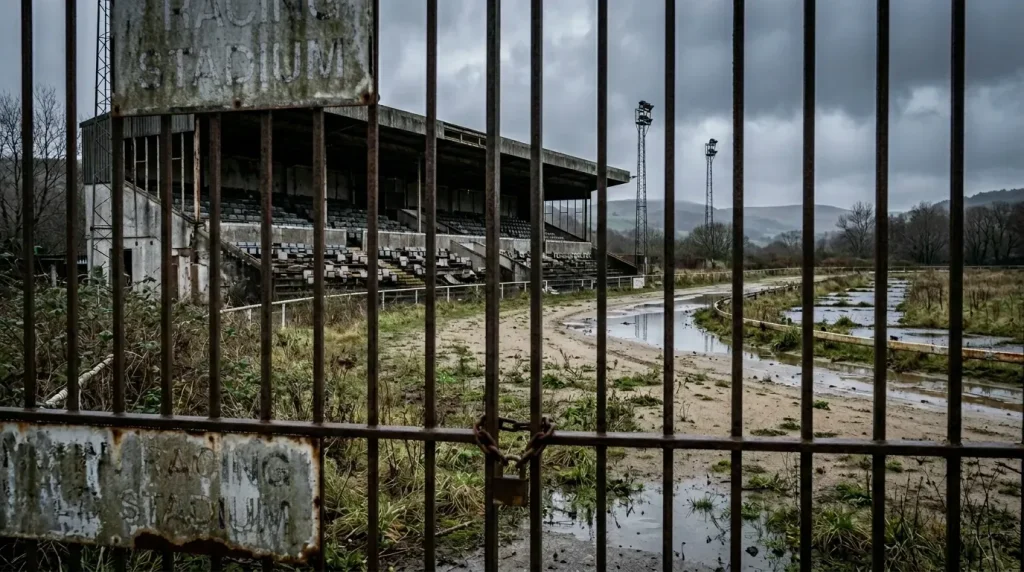
In February 2026, the Welsh Government announced that greyhound racing would be banned in Wales — making it the first country within the United Kingdom to legislate against the sport. The sole licensed track affected, Valley Stadium in Ystrad Mynach, was given a closure window between 2027 and 2030. For an industry already managing decades of decline, the Wales greyhound ban landed as both a practical blow and a political signal.
The decision triggered an immediate response from GBGB, which filed for judicial review, and a broader debate across the sport about whether other parts of the UK might follow. For tracks like Oxford, the ban has no direct operational impact — Oxford is in England, where no ban is on the table — but the precedent it sets and the political arguments it deploys affect every licensed venue in the country. Understanding what happened in Wales, and why, is essential context for anyone who follows UK greyhound racing.
How the Ban Unfolded — From Consultation to Judicial Review
The Wales ban did not emerge overnight. It was the culmination of a political process that began with animal welfare campaigners lobbying the Welsh Government (Senedd Cymru) and progressed through a public consultation that gathered responses from both sides of the debate. The formal announcement came in February 2026, when the Welsh Government confirmed that greyhound racing would be prohibited under new animal welfare legislation.
Valley Stadium, the only GBGB-licensed track in Wales, was given a phased closure timeline — somewhere between 2027 and 2030, depending on the legislative timetable and the outcome of legal challenges. The stadium had operated as a BAGS venue, contributing to the SIS broadcast schedule and serving a small but dedicated community of trainers, owners and racegoers in South Wales.
GBGB’s response was swift and combative. The governing body filed for judicial review, arguing that the decision was procedurally flawed and not supported by the evidence gathered during the consultation process. GBGB CEO Mark Bird stated that the announcement had nothing to do with greyhound welfare and everything to do with pressure from the extreme animal rights movement, adding that the Welsh Government’s own consultation summary highlighted the lack of evidence supporting a ban.
The judicial review process is ongoing, and its outcome remains uncertain. If GBGB succeeds, the ban could be overturned or delayed. If the Welsh Government’s decision is upheld, Valley Stadium will close within the designated window, and Wales will become the first UK nation to have no licensed greyhound racing.
The consultation responses revealed a deeply divided public. Welfare organisations and animal rights groups submitted substantial evidence arguing that greyhound racing inherently harms animals. The industry and its supporters submitted counter-evidence pointing to improving welfare data, the economic contribution of the sport and the cultural significance of greyhound racing in working-class communities. The Welsh Government ultimately sided with the welfare arguments, though the strength of the opposing submissions is central to GBGB’s judicial review case.
What the Wales Ban Means for the Remaining UK Tracks
The immediate operational impact of the Wales ban is contained. Valley Stadium represents one of 18 GBGB-licensed tracks, and its closure would reduce that number to 17. The track’s BAGS slots would need to be redistributed among the remaining venues, and trainers based in South Wales would either relocate their operations to English tracks or leave the sport.
For Oxford, the practical consequences are modest. Oxford already runs five days a week and is close to its scheduling capacity. It might absorb one additional BAGS slot if the timetable requires it, but the stadium is unlikely to undergo a fundamental change in its operations because of the Wales ban. The trainers who currently supply dogs to Valley Stadium might redirect some of their entries to Oxford if the geography works — Oxford and South Wales are roughly two hours apart by road — but the numbers involved are small relative to Oxford’s existing kennel pool.
The broader impact is psychological and political. The Wales ban demonstrates that a UK government can ban greyhound racing within its jurisdiction, and it provides a template for campaigners seeking similar outcomes in England and Scotland. The industry’s argument — that regulated racing with improving welfare standards deserves to continue — was tested in Wales and found insufficient to prevent legislative action. Every remaining track now operates in the knowledge that the same argument may be tested again, in a different parliament.
The financial implications are also worth noting. The loss of one BAGS venue means one fewer contributor to the SIS broadcast schedule and one fewer source of levy income for the BGRF. At a time when the BGRF levy is already declining — from over £20 million at its peak to £6.75 million in 2026–25 — any further contraction of the track network pressures the funding model that sustains the entire sport. The levy depends on turnover, and fewer tracks means fewer meetings, which means less betting volume flowing into the system. It is a feedback loop that the industry can ill afford to accelerate.
Could a Ban Spread? — The Broader Political Landscape
The question every greyhound racing stakeholder is asking is whether the Wales ban is an isolated event or the beginning of a pattern. The historical trajectory provides ammunition for pessimists: the UK had 77 licensed tracks in the 1940s and now has 18. Scotland has no active licensed tracks. If Wales follows through, the sport will exist only in England — a shrinking footprint for a once-national pastime.
In England, there is no imminent legislative threat. The UK Parliament has not signalled an appetite for a greyhound racing ban, and the sport retains support among some MPs, particularly those representing constituencies with active tracks. The cultural argument — that greyhound racing is a working-class tradition with deep community roots — carries more weight in England than it did in Wales, where a single track served a relatively small constituency.
The industry is also attempting to control the narrative through the centenary programme. With 2026 marking 100 years since the first greyhound race in Britain (at Belle Vue Stadium, Manchester, on 24 July 1926), GBGB has launched a celebration campaign designed to highlight the sport’s heritage, its economic contribution and its welfare improvements. The timing is deliberate: it is harder to ban a sport in the year you are commemorating its century, and the positive coverage generated by centenary events provides a counterbalance to the negative press from the Wales ban.
For Oxford specifically, the centenary has practical significance. The Sandy Lane Sprint was elevated to Category One status in 2026 as part of the expanded calendar that accompanies the centenary celebrations. The stadium is positioned as a revival story — proof that greyhound racing can grow, not just decline — and that narrative serves the industry’s broader political defence. Whether it is enough to prevent further bans will depend on factors beyond any single track’s control: the evolving public attitudes toward animal sport, the strength of the welfare lobby and the willingness of future governments to legislate.
The wider context is set out in our Oxford dogs results guide.
