Oxford Dogs Results — Race Times, Trap Stats & Track Guide
 Available in US
Every race. Every trap. Every second counted.
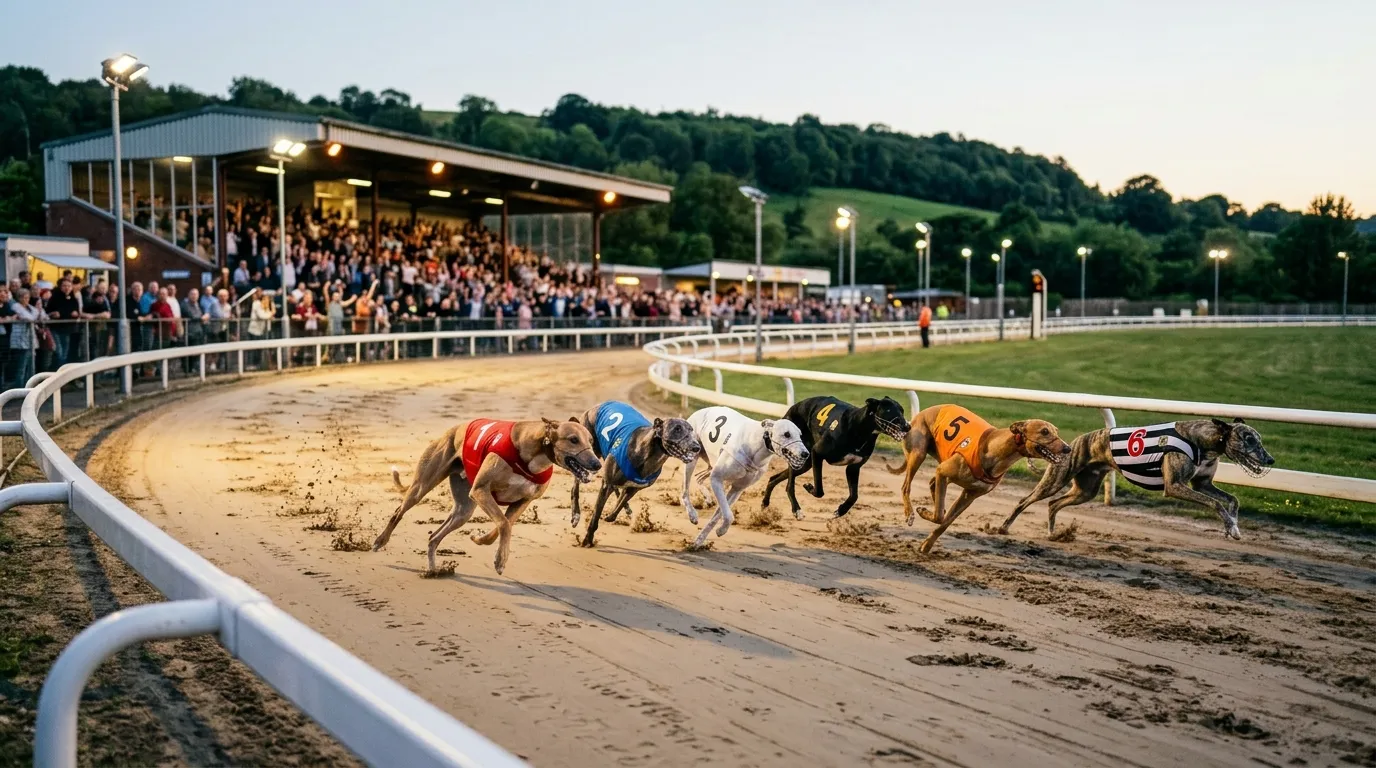
Oxford dogs results tell a story that most greyhound data pages ignore — the story of a track that came back from the dead. Oxford Stadium, the only licensed greyhound venue in Oxfordshire, shut its traps on 29 December 2012 and stayed dark for nearly a decade. When Kevin Boothby poured roughly £1.8 million into a full refit and reopened the doors for greyhound racing on 2 September 2022, the sport regained a track with genuine heritage and an increasingly competitive race programme. This page aggregates Oxford race results, trap-by-trap win percentages, distance breakdowns and everything else a punter or form student needs before the next card.
Why does any of this matter beyond nostalgia? Because greyhound racing remains a significant economic engine across Britain — contributing £55 million to the UK economy each year and supporting more than 7,000 jobs across roughly 500 licensed trainers, 3,000 kennel staff and 15,000 registered owners. Oxford is one of only 18 GBGB-licensed tracks still operating in the country, which means every meeting generates data worth studying for both casual bettors and serious form analysts. The track runs up to five days a week, fields graded and open races across three distances, and has already produced some sharp times on its 397-metre sand oval.
What follows is not a rehash of last night's finishing order. It is a track-level dossier: surface characteristics, trap bias drawn from 345 graded winners, historical context stretching back to 1939, welfare metrics, and a walkthrough of the betting formats available on every Oxford card. If you have been searching for Oxford greyhound results and found little more than a raw list of positions, this is the deeper read you were after.
What Oxford Punters Need to Know Before the Next Race
- Trap 5 dominates Oxford graded racing with a 23.5% win rate across 345 analysed winners — the widest bias at any BAGS track of comparable size.
- Oxford races five days a week (Monday, Tuesday, Thursday, Friday, Saturday), mixing morning BAGS cards with evening open meetings.
- The fastest 450-metre run in 2026 stands at 26.47 seconds, set by Alright Twinkle in February — a benchmark for standard-trip form.
- The stadium reopened in September 2022 after a £1.8 million refurbishment following a ten-year closure, and now hosts Category One competitions including the Sandy Lane Sprint.
- UK greyhound racing marks its centenary in 2026, and Oxford's upgraded open-race calendar reflects that momentum.
Oxford Stadium Track Profile — Distances, Surface & Layout
Location: Sandy Lane, Cowley, Oxford OX4 6LJ
Circumference: ~397 metres
Surface: Sand
Hare: Outside Sumner
Race distances: 253 m, 450 m, 650 m
Licence: GBGB (Greyhound Board of Great Britain)
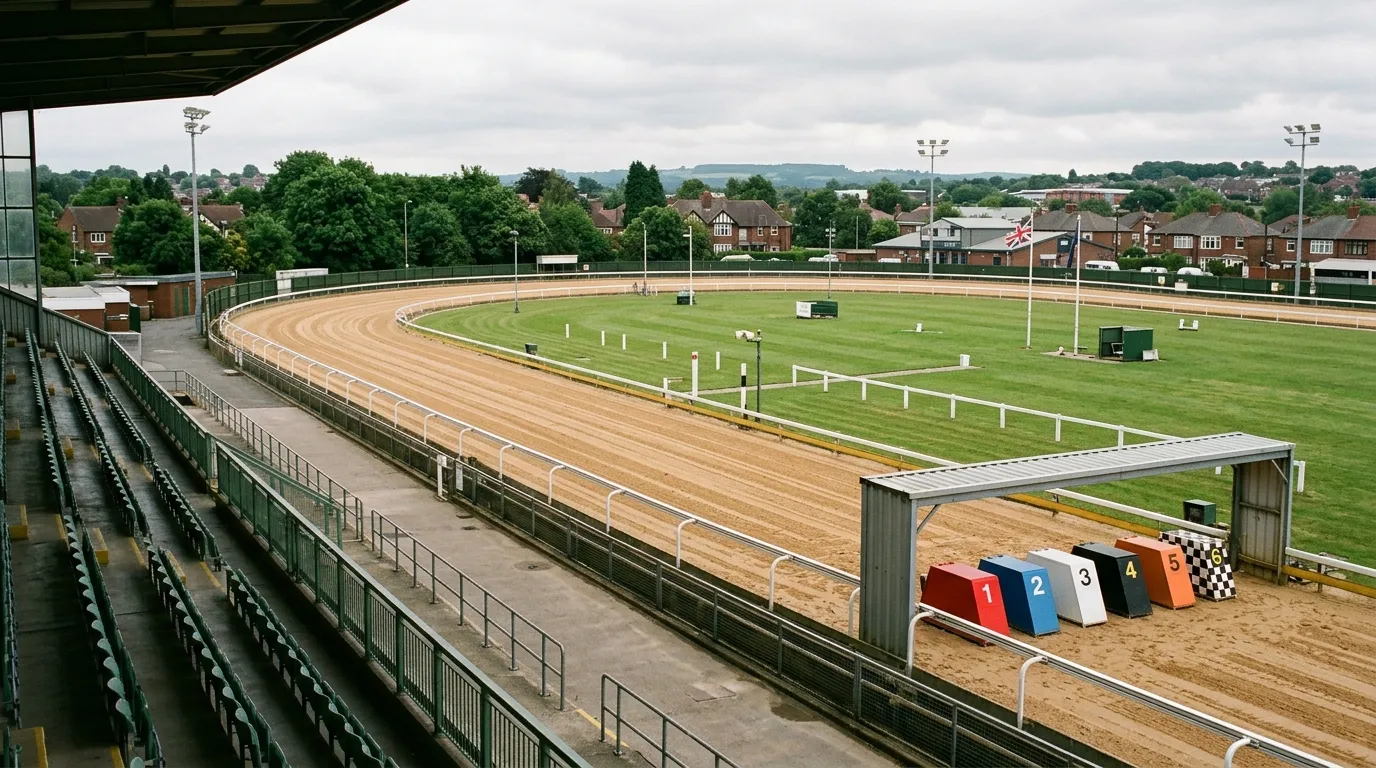
Oxford Stadium sits on a plot that has hosted racing since 1938, though the current surface and infrastructure date from the 2022 rebuild. The circumference of roughly 397 metres makes it a mid-sized oval by British standards — smaller than Towcester's 460-metre loop but larger than sprint-specialist Crayford at 348 metres. That middle-ground geometry matters because it shapes how dogs negotiate the bends, how much rail advantage exists and, ultimately, which traps produce winners.
The surface is sand — not the Polytrack used at several modern UK tracks. Sand gives a different grip profile: it drains reasonably well in light rain, but heavier downpours can soften the going quickly, slowing times by a second or more over 450 metres and subtly shifting trap bias as the rail line becomes less dependable. Groundstaff at Oxford maintain the surface between meetings, but punters should still check going reports before assessing form. A dog that clocked 26.8 on fast sand may struggle to break 27.5 on a heavy surface — and that gap changes the complexion of an entire race.
The outside Sumner hare runs on a fixed rail outside the running line, which is the standard lure configuration for most GBGB-licensed venues. Dogs break from six traps on the home straight and hit the first bend almost immediately on the 253-metre sprint trip. For the standard 450-metre distance, the field covers a full circuit plus extra, giving wide runners a chance to recover from early crowding. The 650-metre stayers' trip adds another half-lap, making stamina and the ability to stay out of trouble through multiple bends genuinely decisive.
Compared to other active BAGS tracks, Oxford occupies a distinctive niche. Its three-distance programme offers variety that single-trip venues like Crayford cannot match, while the sand surface sets it apart from Polytrack rivals such as Romford. Of the GBGB-licensed stadiums still operating in Britain, Oxford is the only one in the Thames Valley corridor, giving it a natural catchment of bettors, owners and fans who would otherwise face long drives to Swindon or Hove.
253 m — Sprint
One turn. Pure early pace. Trap draw is critical; wide runners rarely recover. Typical winning time: ~15 seconds.
450 m — Standard
Two turns plus extra. The bread-and-butter trip. Rewards both pace and racing manners. Typical winning time: ~26–27 seconds.
650 m — Stayers
Three-plus turns. Stamina and bend skill matter most. Typical winning time: ~39–40 seconds.
The bend geometry deserves attention. Oxford's turns are not especially tight by UK standards, but the sand surface means dogs lose more traction through the curve than they would on Polytrack. Front-runners who hit the first bend in front have a significant advantage because they avoid the kickback and crowding that slows mid-pack runners. This bend dynamic is the single biggest factor behind Oxford's trap bias — a topic we will examine in detail after a look at the racing schedule.
Oxford Greyhound Racing Schedule — Race Days and Start Times
Oxford runs greyhounds on up to five days each week, a schedule that reflects both the Bookmakers Afternoon Greyhound Service contract and the venue's own evening programme. The BAGS fixtures — Monday, Tuesday and Thursday — exist primarily for the betting market, broadcast via SIS to licensed betting offices and online platforms across the UK and internationally. These meetings start earlier in the day, with the Thursday card kicking off at 10:32 to slot into the morning racing window before horse racing takes over afternoon screens.
Friday and Saturday evenings are Oxford's public-facing meetings. The 17:47 first-race time allows the venue to operate as a night-out destination, with the SAVANA restaurant and trackside bar open alongside the racing. Open races, special events and higher-grade competitions tend to land on these evening slots, which means the quality of the fields — and the corresponding betting markets — is generally sharper at the weekend. Punters who focus solely on BAGS data may miss the form signals coming from Friday and Saturday cards.
One scheduling note worth flagging: Oxford also shares its stadium with speedway on Wednesday, Thursday and Sunday evenings, so the venue operates almost every day of the week across both sports. The speedway co-habitation occasionally affects the racing surface, particularly early in the greyhound season when the track transitions between use. Checking the going report on these crossover weeks is especially important.
For the spring 2026 season, Oxford's schedule is fully locked in, with Category One open races — including the Sandy Lane Sprint — scheduled around the regular card. Keep an eye on the official Oxford Stadium site for any fixture amendments, particularly around bank holidays when times may shift.
Oxford Trap Bias — Which Trap Wins Most Often?
Trap bias is the single most underused edge in greyhound betting. Every track has one — a statistical tendency for certain traps to produce winners more often than the 16.7% you would expect if all six boxes were equal. At Oxford, the bias is not subtle. Data from Greyhound Stats UK, covering 345 graded-race winners in the 2026 season, reveals a clear pattern that any serious punter should build into their selections.
| Trap | Win % | Winners (of 345) |
|---|---|---|
| Trap 1 (Red) | 19.7% | ~68 |
| Trap 2 (Blue) | 17.6% | ~61 |
| Trap 3 (White) | 18.9% | ~65 |
| Trap 4 (Black) | 19.9% | ~69 |
| Trap 5 (Orange) | 23.5% | ~81 |
| Trap 6 (Striped) | 16.0% | ~55 |
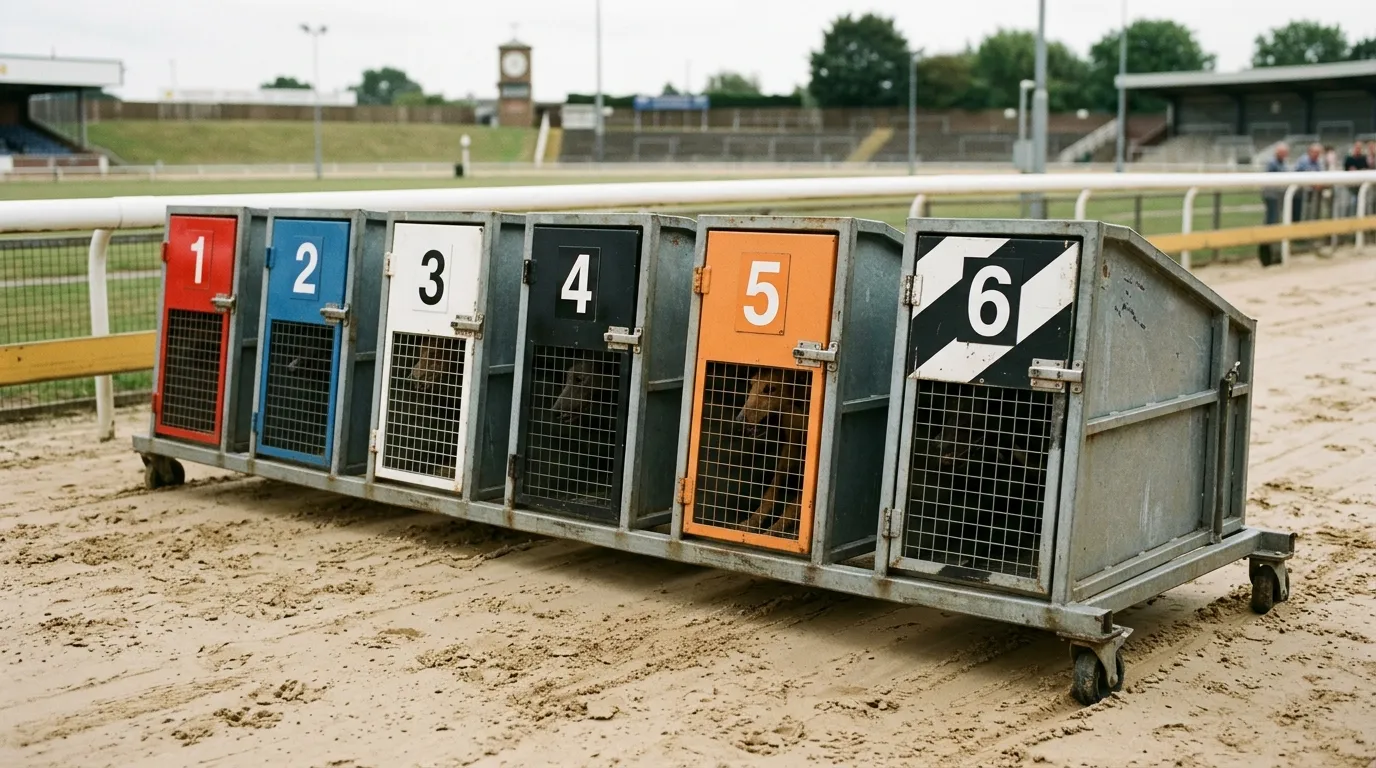
Trap 5 wins nearly a quarter of all graded races at Oxford. That is not a rounding quirk — it is a 7.5-percentage-point advantage over Trap 6 and almost four points clear of the next best box. To put it in practical terms: if you blindly backed Trap 5 in every graded race at Oxford, you would have a winner roughly one in every four races. No other trap comes close to that strike rate.
Why does Trap 5 dominate? The answer lies in bend geometry and running lines. Oxford's first bend favours a dog that can break smartly from a middle-to-high draw and sweep towards the rail without being squeezed. Trap 5 runners get enough room to cut across early without the wide run that punishes Trap 6 dogs. Meanwhile, Trap 6 — the widest draw — consistently underperforms because those dogs must cover extra ground through the first two bends, and on a sand surface where traction varies, that extra yardage compounds fast.
Traps 1 and 4 also perform well, sitting at 19.7% and 19.9% respectively. Trap 1 benefits from immediate rail access, which is valuable for pace-setting dogs that break cleanly. Trap 4 occupies a sweet spot between inside crowding and outside drift. The weakest boxes are Trap 2 (17.6%) and Trap 6 (16.0%), both of which tend to get caught in traffic on the first bend — Trap 2 from internal crowding, Trap 6 from the wide arc.
"We want Oxford to establish itself as a flagship venue which can be at the heart of greyhound racing's revival" — Kevin Boothby, Managing Director, Oxford Stadium. That ambition shows in the quality of grading at the track. Well-graded races produce more meaningful trap data because the dogs are more evenly matched, allowing track geometry rather than class gaps to drive the results. The 345-winner sample from 2026 graded racing is large enough to draw actionable conclusions.
Trap 5 at Oxford wins 23.5% of graded races — nearly 1.5 times the expected average. Factor this into your selections, particularly on sprint trips where early position is decisive. Conversely, approach Trap 6 runners with caution unless the dog has a proven record of overcoming wide draws.
One caveat: these figures apply to graded racing. Open races — featuring higher-class dogs with more tactical versatility — may produce a different distribution. Similarly, the 253-metre sprint trip amplifies trap bias because there is only one bend to negotiate, whereas the 650-metre stayers' trip dilutes it over multiple turns. We break down those distance-specific patterns in the next section.
Race Distances at Oxford — Sprint, Standard and Staying Trips
Oxford offers three race distances — 253 metres, 450 metres and 650 metres — and each demands a different type of dog, a different reading of form and, crucially, a different approach to trap bias. Lumping all three together when assessing Oxford dogs results is a common mistake that costs bettors money. The sprint and the stayers' trip might as well be different sports.
253 Metres — The Sprint
The shortest trip at Oxford covers one bend and roughly 15 seconds of racing. There is almost no time for recovery if a dog misses the break or gets bumped at the first turn. Early pace — measured by sectional times to the first bend — is the dominant factor. Dogs drawn in Traps 4 and 5 have a natural advantage because they can reach the rail line without the crowding that affects low draws or the extra ground that punishes Trap 6. The current fastest 253-metre time at Oxford in 2026 is 14.85 seconds, set by Jazzy George in an OR2 graded race on 7 March 2026, according to Greyhound Stats UK.
Sprint races at Oxford tend to produce shorter-priced favourites because the margin for error is tiny. When a quick dog draws Trap 5 on the 253-metre trip, the market rarely misses it. The value, if it exists, usually lies in finding dogs with proven early pace drawn inside (Traps 1–2) who can hold their line through the bend without drifting.
450 Metres — The Standard Trip
This is Oxford's bread-and-butter distance. The majority of graded races are run over 450 metres, covering two full bends plus extra on the home straight. The fastest 450-metre run in 2026 is 26.47 seconds, recorded by Alright Twinkle in an open race on 7 February 2026. That time sets the benchmark for standard-trip form at Oxford — any dog running within half a second of it on a comparable going is performing at a high level.
At 450 metres, the balance between early pace and finishing speed becomes important. A front-runner that leads into the first bend has a clear advantage, but unlike the sprint, a strong closer can make up ground down the back straight and through the second bend. This is where form figures start to tell a more nuanced story: a dog that consistently finishes fast over 450 metres but has moderate early pace may be undervalued when drawn in a trap that gives it room to work into the race.
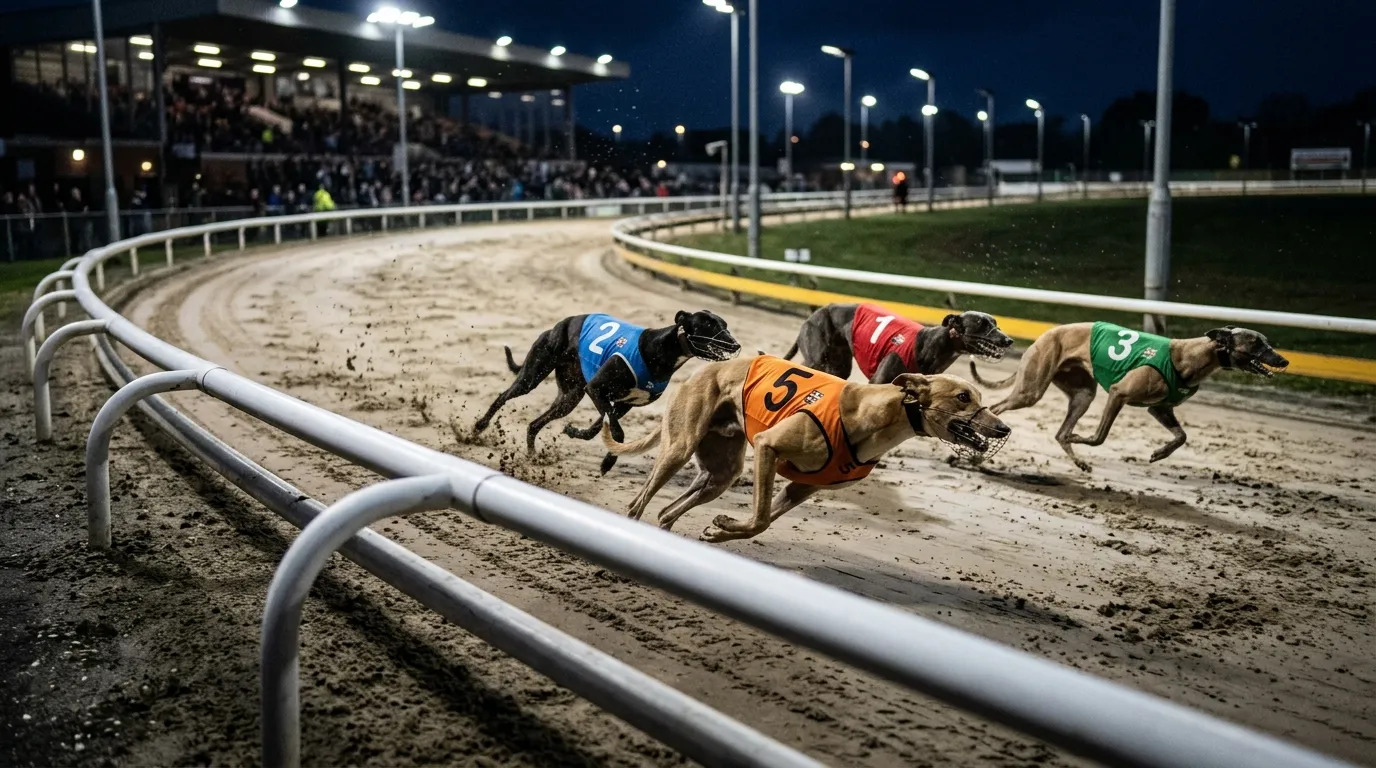
650 Metres — The Stayers' Trip
The 650-metre distance adds an extra half-lap and introduces stamina as the primary variable. Races over this trip typically take around 39–40 seconds, and the current track-best stands at 39.09 seconds, set by Eagles Respect in an open race on 25 January 2026. Stayers' races are less common on the weekly Oxford card — most appear on Friday and Saturday evening meetings or as part of open-race programmes.
Trap bias over 650 metres is less pronounced than on shorter trips because the field has more time to sort itself out through three or more bends. Dogs that can settle behind the pace and pick off tiring leaders on the final turn often produce results that look generous in hindsight. If you are studying Oxford dogs results specifically for stayers' form, pay more attention to how a dog finishes its races than where it breaks from the traps.
Those distance-specific fastest times are not just curiosities — they form the benchmark against which every Oxford runner should be measured. The next section breaks down the track records in full.
Oxford Track Records — Fastest Greyhounds by Distance
Track records at a reopened venue carry a particular significance. Because Oxford only returned to licensed racing in September 2022, the current record book is effectively a post-revival document — every time listed has been set within the last four years, on the refurbished sand surface. These are not dusty marks from the 1990s that exist only in archive tables. They reflect the current track configuration and the quality of the dogs running at Oxford right now.
| Distance | Time | Dog | Grade | Date |
|---|---|---|---|---|
| 253 m | 14.85 s | Jazzy George | OR2 | 7 March 2026 |
| 450 m | 26.47 s | Alright Twinkle | OR | 7 February 2026 |
| 650 m | 39.09 s | Eagles Respect | OR | 25 January 2026 |
Source: Greyhound Stats UK, data current as of March 2026.
Several things stand out. All three records were set in open races or high-grade competitions, which makes sense — the fastest dogs naturally run in the highest-class events. The 253-metre record of 14.85 seconds is sharp by any standard; for context, sub-15-second times on a 253-metre trip indicate genuine sprint quality, and Jazzy George's mark suggests Oxford's straight and first bend are conducive to fast early times when the surface is in good condition.
The 450-metre benchmark of 26.47 seconds is particularly useful for form comparison. Most graded winners at Oxford clock between 27.0 and 27.8 seconds over this trip, so any dog that runs within a second of the record is performing well above average grade level. If you see a runner in a graded race whose best time sits at 26.8 or below, you are looking at an animal that could be running in open company soon.
The stayers' record of 39.09 seconds is harder to contextualise because 650-metre races are less frequent. Eagles Respect's time suggests a strongly run race with sustained pace rather than a fast early split followed by a fade — which is the pattern that produces the quickest stayers' times on most circuits.
Leading Oxford Trainers — Who Dominates the Results?
Greyhound racing is often viewed as a sport where the dog does all the work, but trainers shape results more than casual observers realise. At Oxford, a handful of kennels dominate the results pages, and understanding which trainers run the most winners — and on which distances — gives punters an edge that raw form figures alone cannot provide.
The leading Oxford trainers tend to be based within reasonable travelling distance of the track, which matters because greyhounds race frequently and long journeys can affect performance. Kennels in the Oxfordshire, Berkshire and Wiltshire corridor supply the bulk of Oxford entries, and trainers with the largest string of dogs naturally appear on more cards. A trainer running eight dogs across a Friday-evening meeting has more chances to hit the board than one with a single entry, but volume alone does not explain the performance gaps.
What to watch in trainer form:
- Win rate at Oxford specifically, not overall career stats across all tracks.
- Performance by distance — some trainers specialise in sprinters, others in stayers.
- Recent trajectory: a trainer whose dogs have been improving times over the last month is worth following even if their longer-term stats are unremarkable.
- Trap record: trainers who consistently draw high traps and still win are preparing dogs well for Oxford's layout.
"Greyhound welfare will always be our biggest priority at Oxford Stadium. Greyhounds are the true stars of our sport, and we will cut no corners in providing every dog with the care and attention they deserve" — Kiaran O'Brien, Racing Manager, Oxford Stadium. That welfare-first approach influences which trainers run at the venue. Oxford's management has been vocal about working with kennels that meet high welfare standards, and the track's racing manager plays a role in ensuring the grading system matches dogs fairly. Trainers who consistently run well-prepared, fit greyhounds tend to accumulate better Oxford-specific records over time.
For punters, the actionable insight is straightforward: track the top three or four trainers at Oxford across a month of results. Note which distances they favour, how their dogs perform from different traps, and whether they tend to peak their runners for open-race nights or spread efforts across the weekly BAGS cards. This pattern-recognition work takes about ten minutes per week and consistently surfaces value bets that the market misprices because it weights overall form too heavily and track-specific trainer data too lightly.
Betting on Oxford Dogs — SP, Forecast and Tricast Explained
Every Oxford race generates three primary bet types that punters encounter: the Starting Price single, the forecast and the tricast. Understanding how each works — and how Oxford's specific characteristics influence the returns — is fundamental to making informed bets rather than guessing.
Starting Price and Betting Returns
The Starting Price (SP) is the final price offered by on-course bookmakers at the moment the traps open. For most bettors watching Oxford via BAGS coverage in a betting shop or online, the SP is the price their bet settles at unless they have taken an early price. Oxford's SP market is shaped by the same factors as any greyhound track — recent form, trap draw, trainer reputation — but the strength of the Trap 5 bias means that SPs on Trap 5 runners tend to be compressed. The market knows about the bias, which means the value is not simply in backing the favoured trap every time but in identifying races where the Trap 5 runner is overrated or another dog has been overlooked.
Betfair's Betfair Starting Price (BSP) offers an exchange-based alternative. BSP is determined by the weight of money matched on the exchange just before the race starts and often differs from the on-course SP — sometimes significantly. Punters who consistently compare SP and BSP across Oxford meetings will occasionally spot discrepancies worth exploiting, particularly in early-morning BAGS races where exchange liquidity is thinner and prices can drift.
Forecast and Tricast
A forecast requires picking the first two dogs home in the correct order. A tricast extends that to the first three. Both are pool bets at Oxford — the dividend depends on how much money is in the pool and how many winning tickets are sold. The appeal of forecast and tricast betting lies in the outsized returns: a correctly predicted tricast in a competitive six-dog race can pay multiples of a hundred times the stake.
Oxford's trap bias feeds directly into forecast strategy. If Trap 5 is the most likely winner, building forecasts with a Trap 5 first selection and rotating second-place picks across Traps 1, 3 and 4 is a statistically grounded approach for graded races. Tricast construction follows the same logic but adds a third variable — which is where stayers' races become attractive, because the longer trip produces more variance in finishing positions and consequently larger pool dividends.
The Scale of UK Greyhound Betting
Oxford's betting markets exist within a wider industry context. According to GREY2K's global industry report, UK greyhound betting turnover reached .81 billion (approximately £1.46 billion) in 2024, representing roughly a quarter of worldwide greyhound wagering. That is a substantial market, though it has declined by around 15% from .12 billion in 2020. The total UK prize fund stands at £15.7 million annually — and Oxford's share of that fund has grown since reopening, as the venue has attracted higher-grade competitions to its calendar.
For the individual punter, these macro numbers matter because they indicate the depth and liquidity of the market. A liquid betting market means tighter spreads and more accurate prices, which in turn means that genuine edges — like understanding Oxford's trap bias or recognising a trainer in strong form — become harder to find but more valuable when you do.
Oxford Stadium — From 1939 Flapping Track to 2022 Revival
Oxford Stadium's history is a compressed version of British greyhound racing's own arc: a pre-war birth, a golden age under BAGS, a slow decline, a brutal closure and an unlikely resurrection. Understanding that timeline puts the current Oxford dogs results into a context that raw data alone cannot provide.
The Early Decades
The site on Sandy Lane in Cowley had hosted unlicensed "flapping" races before the stadium was built in 1938. The first licensed meeting took place on 31 March 1939, opened by Lord Denham. Those early years were interrupted by the Second World War, but by the late 1940s Oxford had established itself as one of southern England's busiest tracks. The post-war period was the golden age of UK greyhound racing more broadly — in the 1940s, there were 77 licensed tracks and more than 200 unlicensed venues across Britain, drawing over 50 million annual attendances at their peak.
The BAGS Revolution
In 1967, Oxford became one of the first four tracks to receive a contract under the newly created Bookmakers Afternoon Greyhound Service, alongside Hackney, Kings Heath and Park Royal. BAGS transformed the economics of greyhound racing by guaranteeing that afternoon meetings would be broadcast into betting shops, providing a consistent revenue stream independent of turnstile income. For Oxford, the BAGS contract meant financial stability and a schedule built around the betting market rather than spectator attendance — a model the track still operates under today.
The Sandy Lane Sprint Legacy
Over the decades, Oxford built a reputation for quality sprint racing on its 253-metre trip. The Sandy Lane Sprint became the venue's flagship open competition, attracting the fastest dogs in the country. That legacy continues in 2026, with the Sandy Lane Sprint elevated to Category One status — a significant marker of prestige in the GBGB competition calendar.
Closure and the Ten-Year Gap
Oxford Stadium ran its last greyhound meeting on 29 December 2012. The final race was won by Moortown Mystiq — a name etched into the track's history as a full stop rather than a footnote. The closure was part of a broader trend: since the 1940s, the number of licensed UK tracks had fallen from 77 to fewer than 25, squeezed by rising land values, declining attendances and competition from other betting products. The site remained in limbo for nearly a decade, used intermittently for speedway but silent on race nights.
"Everyone connected to greyhound racing has an association or memory of Oxford Stadium, and its return this year has injected some much-needed positivity into the sport" — Ben Keith, Owner, Star Sports.
The 2022 Revival
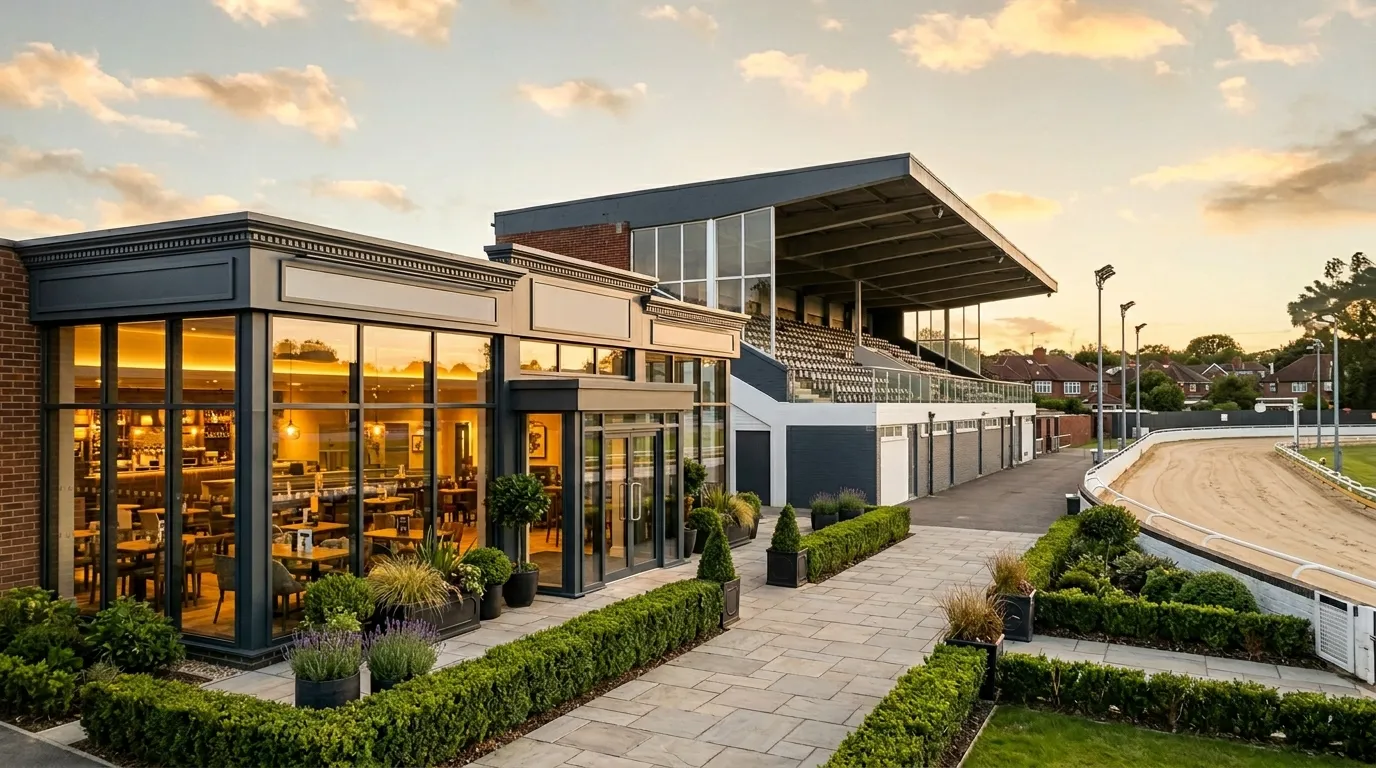
The comeback was driven by Kevin Boothby, who invested approximately £1.8 million into refurbishing the stadium under a ten-year lease from Galliard Homes, the site's owners. The work included a full resurface of the racing track, installation of new traps, renovation of the grandstand and creation of the SAVANA Bar & Restaurant with 180 covers. Greyhound racing returned on 2 September 2022, and within months Oxford had regained its GBGB licence and begun hosting BAGS meetings.
2026 marks the centenary of licensed greyhound racing in Britain. The first official meeting took place on 24 July 1926 at Belle Vue Stadium in Manchester, where a greyhound named Mistley won the opening race over 440 yards in 25.00 seconds. GBGB is celebrating the milestone with a year-long programme including a gala dinner at Dunstall Park featuring a recreation of that first race.
The reopening also represented a counter-narrative to an industry in structural decline. At a time when Welsh devolution was moving towards banning greyhound racing in Wales entirely, Oxford's return added one track to a column that had only been subtracting for decades. Whether that momentum holds depends on attendance, betting turnover and the continued investment of operators like Boothby — but four years in, the revival has stuck.
Greyhound Welfare at Oxford — Injury Rates and Retirement Data
No responsible guide to Oxford dogs results can avoid the welfare question. Greyhound racing operates under scrutiny, and the data that GBGB publishes annually provides the clearest picture of where the sport stands on the metrics that matter most: injuries, fatalities and what happens to dogs when they stop racing.
The most recent GBGB injury and retirement data, covering 2024, recorded 3,809 injuries from 355,682 individual runs across all licensed tracks — an injury rate of 1.07%, the lowest on record. The on-track fatality rate fell to 0.03%, having halved from 0.06% in 2020. These are industry-wide figures rather than Oxford-specific numbers, but they establish the regulatory baseline under which Oxford operates as a licensed GBGB venue.
Retirement outcomes have also improved markedly. In 2024, 94% of greyhounds leaving the racing population — 5,795 dogs — were successfully rehomed or retired to their owners. That compares with 88% in 2018, when the current tracking methodology was introduced. Perhaps the starkest indicator of progress: euthanasia for economic reasons dropped from 175 dogs in 2018 to just 3 in 2024, a 98% reduction.
"There is much to be pleased and encouraged by in this year's data. It shows that the initiatives we have introduced in recent years are now embedded and are helping to consolidate the significant progress we have made since 2018 across all measures" — Mark Bird, Chief Executive, GBGB.
Oxford's own welfare framework sits within this national structure. The track's Injury Retirement Scheme, administered through GBGB, has contributed to an industry-wide total of nearly £1.5 million in veterinary payments for career-ending orthopaedic injuries since December 2018. The scheme covers treatment costs that might otherwise fall on owners or trainers, removing the financial incentive to opt for euthanasia over rehabilitation.
None of this means the debate is settled. Anti-racing campaigners point to cumulative injury totals, and legitimate questions remain about tracking greyhounds after they leave the formal system. But for punters assessing Oxford results, the welfare data serves a practical purpose: a track operating under strong welfare governance tends to produce cleaner racing, better-maintained surfaces and healthier dogs — all of which contribute to more reliable form data.
Oxford Open Races — Sandy Lane Sprint, Hunt Cup and More
Open races are the prestige tier of greyhound competition — events where the best dogs in the country are invited to race regardless of their home track, and where prize money, grading points and bragging rights are all on the line. Oxford's open-race calendar has expanded considerably since the 2022 reopening, reflecting both the track's ambition and GBGB's confidence in the venue.
The headline event is the Sandy Lane Sprint, run over the 253-metre trip that has always been Oxford's signature distance. In 2026, the Sandy Lane Sprint has been elevated to Category One status — one of only four sprint competitions at that level in the entire GBGB calendar, which features 50 Category One and 27 Category Two events across all UK tracks. That upgrade is a direct statement about Oxford's standing in the sport and the quality of the fields the track can attract.
Beyond the Sandy Lane Sprint, Oxford hosts several other named competitions. The bet365 Hunt Cup is a 650-metre staying event that tests endurance over three-plus bends. The bet365 Challenge Cup and Pall Mall Stakes — the latter originally held at Harringay before transferring to Oxford in 1988 — add further depth to the programme. The Oxford Puppy Collar provides a development pathway for younger dogs, often serving as an early indicator of future open-race talent.
For punters, open-race nights at Oxford are a different proposition to regular graded cards. The fields are stronger and more unpredictable, trap bias may be less decisive because the dogs are higher quality, and the betting markets are typically deeper with more money flowing through the exchange and tote pools. Studying Oxford dogs results on these evenings separately from standard BAGS data gives a more accurate picture of the track's competitive ceiling.
Frequently Asked Questions About Oxford Greyhound Racing
What days does Oxford Stadium hold greyhound racing, and what are the start times?
Oxford races on five days each week. BAGS meetings run on Monday (first race 14:26), Tuesday (14:26) and Thursday (10:32), providing afternoon and morning fixtures broadcast to betting shops via SIS. Evening meetings take place on Friday and Saturday, both starting at 17:47. These evening cards tend to feature higher-grade races and open events. The schedule can shift around bank holidays and special event weekends, so it is worth checking the official Oxford Stadium site for the latest fixture list.
What are the race distances at Oxford, and which trap wins most often?
Oxford runs three distances: 253 metres (sprint), 450 metres (standard) and 650 metres (stayers). The dominant trap across graded racing is Trap 5, which wins 23.5% of races based on a sample of 345 winners in 2026 — significantly above the expected 16.7% average. Trap 4 (19.9%) and Trap 1 (19.7%) also perform above par, while Trap 6 (16.0%) is the weakest draw. The bias is most pronounced on the sprint trip, where a single bend magnifies the advantage of favourable draw positions.
How can I check Oxford greyhound results and where is the best archive?
Live and recent Oxford dogs results are available through the official Oxford Stadium website, which publishes racecards and finishing positions for every meeting. For deeper statistical analysis — including trap stats, fastest times and trainer records — Greyhound Stats UK provides comprehensive data updated after each card. Historical results from before the 2012 closure can be found through the Greyhound Racing Times archive and Wikipedia's Oxford Stadium page, though detailed race-by-race data from the pre-closure era is limited compared to the post-2022 dataset.
