
Sandy Lane Sprint and Oxford Open Races — Calendar, Results and History
 Available in US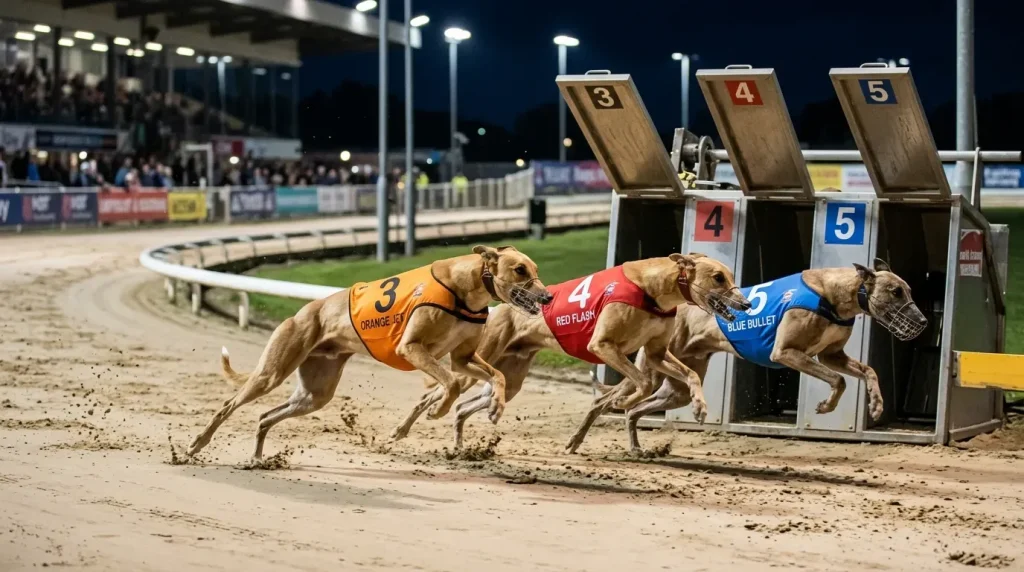
The Sandy Lane Sprint became a Category One event in 2026, and with that single reclassification, Oxford Stadium entered a tier of greyhound racing it has never occupied before. Category One is the highest grade in the GBGB open-race system — reserved for the competitions that attract the best dogs, the biggest crowds, and the richest prize funds. For a track that was shuttered for an entire decade and only returned to licensed racing in September 2022, hosting an elite sprint tournament is a statement of intent about Oxford’s future in the sport.
But the Sandy Lane Sprint is not Oxford’s only claim to the open-race calendar. The bet365 Hunt Cup tests staying stamina over 650 metres. The bet365 Challenge Cup offers another long-distance test. The Pall Mall Stakes, inherited from the closed Harringay Stadium in 1988, carries decades of history. And the Oxford Puppy Collar gives emerging young dogs a formal stage to announce themselves. Together, these events form a calendar that transforms Oxford from a reliable BAGS workhorse into something more ambitious — a venue where the graded cards pay the bills and the open-race nights build the reputation.
This guide covers every major open event at Oxford: the Sandy Lane Sprint in depth, the staying competitions, the puppy races, the full seasonal calendar, and the centenary context that makes 2026 a special year across the entire sport. If you are betting Oxford open races or planning to attend one, this is the background you need.
Sandy Lane Sprint — Oxford’s Category One Sprint Showpiece
The Sandy Lane Sprint is named after the road that gives Oxford Stadium its address — Sandy Lane, Cowley, Oxford. The race is run over 253 metres, the shortest distance on Oxford’s card, and the entire event unfolds across one or two evenings in the early part of the racing season, typically March. The format follows the standard open-race structure: heats to determine qualifiers, semi-finals to narrow the field, and a final that decides the winner. Each round consists of six-dog races, with the fastest qualifiers advancing through the rounds based on finishing position and time.
The elevation to Category One status in 2026 is the most significant development in Oxford’s open-race history. According to Greyhound News UK’s report on the GBGB announcement, the Sandy Lane Sprint is one of just four Category One sprint competitions in the 2026 calendar — a notable expansion from previous years, when the sport’s sprint programme was less extensive at the top level. The Category One classification means the event draws entries from the best sprint greyhounds across Britain, not just dogs trained locally or within the southern BAGS circuit. Trainers from the Midlands, the North, and even across the Irish Sea will consider entering their fastest dogs, raising the quality of the competition well above what Oxford’s standard graded cards deliver.
The 2026 GBGB schedule includes 50 Category One events and 27 Category Two events distributed across all licensed tracks, a figure that reflects the sport’s commitment to elevating open racing during the centenary year. Oxford’s allocation of the Sandy Lane Sprint as a Category One fixture places the track alongside venues like Towcester, Nottingham, and Hove in the upper tier of the racing calendar. For a stadium that was closed between 2012 and 2022, earning that allocation is a vindication of the investment and effort that went into the reopening.
From a betting perspective, the Sandy Lane Sprint presents a different challenge to standard graded racing. The 253-metre distance at Oxford is a pure test of trap speed and first-bend positioning — the race is over in approximately 15 seconds, and the dog that leads into the turn wins the majority of the time. Trap bias is at its most extreme on the sprint distance, with trap 5 holding the strongest record in graded data. But in a Category One field, the class of the runners can override the trap advantage. An elite sprinter with a personal best under 15 seconds from any trap is a serious contender, and the market prices for Category One races reflect the flattening effect of class on trap bias.
The Sandy Lane Sprint also serves as a barometer for the season ahead. Dogs that perform well in the heats and final often go on to contest other major sprint events at different tracks, and trainers use Oxford’s early-season sprint as a fitness test for their top animals. Watching which dogs qualify from the heats, and how they qualify — winning easily versus scraping through on time — gives you form data that will be relevant for months.
Historically, Oxford has been associated with sprint racing for decades. The 253-metre trip is a defining feature of the track, and the tight circuit favours fast-breaking dogs that can clear the field in the first few strides. The Sandy Lane Sprint formalises that heritage into a competition that now sits at the highest level of the sport.
The Hunt Cup and Challenge Cup — Oxford’s Staying Tests
If the Sandy Lane Sprint showcases raw speed, the bet365 Hunt Cup and bet365 Challenge Cup showcase something more complicated: the ability to sustain pace, navigate multiple bends, and outlast the competition over Oxford’s 650-metre staying trip. These are races where the sprint specialists step aside and the stayers — the dogs bred for endurance and tactical intelligence — take centre stage.
The bet365 Hunt Cup is Oxford’s premier staying event. Run over 650 metres, it follows a heats-to-final format similar to the Sandy Lane Sprint. The distance is Oxford’s longest, covering three or more bends and requiring approximately 39 seconds to complete — more than twice the duration of the sprint. The current track record for 650 metres stands at 39.09 seconds, set by Eagles Respect in January 2026, and times in the Hunt Cup final are expected to cluster within a second or two of that benchmark, depending on going conditions.
The bet365 Challenge Cup offers a second 650-metre open competition at a different point in the calendar, giving staying dogs two marquee opportunities at Oxford each season. Both events are staged as part of GBGB’s published open-race calendar, which lists the full schedule of Category One and Category Two events across all licensed tracks. The Challenge Cup typically carries Category Two status, which draws strong regional fields without quite reaching the national entry depth of a Category One fixture.
The Pall Mall Stakes adds a layer of historical significance to Oxford’s open-race roster. This event was originally staged at Harringay Stadium in north London, one of the grand old venues of British greyhound racing. When Harringay closed in 1987, the Pall Mall Stakes was transferred to Oxford in 1988 — one of several competitions that migrated between tracks as the sport’s venue map contracted over the decades. The Pall Mall retains its identity as a named open event and connects Oxford’s current racing programme to a lineage that stretches back to the mid-twentieth century.
For the bettor, staying races at Oxford demand a different analytical approach than sprints. Trap bias is less decisive over 650 metres because the extra bends give dogs time to overcome a poor starting position. Form and stamina become the primary selection criteria, and trainer specialisation matters more than it does on the sprint: certain Oxford-based trainers consistently produce stayers that outperform their rivals on the long trip, while others focus their kennel resources on sprint dogs. Identifying which trainers enter their strongest animals for the Hunt Cup and Challenge Cup is one of the more productive research tasks in the weeks leading up to each event.
The staying events also tend to produce larger forecast and tricast dividends than the sprints, because the longer race introduces more variability. With three or more bends to negotiate, the chances of an in-running incident — checking, crowding, a bump on the turn — increase, and those incidents can rearrange the finishing order in ways that the pre-race market did not anticipate. If you are looking for exotic-bet value at Oxford, the Hunt Cup and Challenge Cup are the meetings to target.
Oxford Puppy Collar — Spotting the Next Star
Open racing is not exclusively the domain of established campaigners. The Oxford Puppy Collar provides a formal competition for younger greyhounds — dogs in their first or second racing season who are still building their race records and establishing their optimal distances. Puppy events serve a dual purpose in the GBGB calendar: they give young dogs competitive experience in an environment more demanding than standard graded racing, and they give trainers, owners, and bettors an early look at which animals might develop into open-race contenders down the line.
The Puppy Collar at Oxford typically follows the same heats-to-final structure as the senior events, though the field depth may be somewhat shallower depending on the number of eligible entries. Young dogs competing in puppy events are still finding their racing rhythm — their trap behaviour, bend negotiation, and stamina curves are less predictable than those of a seasoned A2 or A3 runner. This unpredictability is part of the appeal: the form guide is thinner, the market is less efficient, and the results can surprise.
The GBGB’s 2026 open-race programme includes seven events designated exclusively for British Bred greyhounds, reflecting a deliberate effort to support domestic breeding alongside the sport’s heavy reliance on Irish imports. While the Oxford Puppy Collar is not necessarily restricted to British Bred dogs, the broader GBGB push toward nurturing home-grown talent creates a context in which puppy events carry increasing importance. Young dogs that perform well in competitions like the Puppy Collar build form profiles that influence their grading trajectory, their entry eligibility for senior open events, and their attractiveness to owners and trainers looking for their next star.
From a betting standpoint, puppy races at Oxford reward close attention to trial data. Many of the dogs entering the Puppy Collar will have limited racecard form — perhaps only a handful of graded runs to their name. Trial times, recorded during non-competitive solo or paired runs at the stadium, provide an alternative data source that can reveal speed and trap behaviour before the dog has built a public form line. Trial data is available through the Oxford Stadium social media channels and through GBGB records, though it requires more effort to access than standard form figures.
The Puppy Collar also functions as a scouting event. Dogs that win or place in the final often progress to stronger open-race entries at Oxford and at other tracks later in the season. Keeping a record of Puppy Collar results — who won, from which trap, with what time — gives you a form library that pays dividends months later when the same dogs appear on a higher-graded card.
Full Open Race Calendar — When Oxford Hosts the Big Nights
Oxford’s open-race events do not land randomly across the year. They follow a structured calendar published by GBGB well in advance of each season, coordinated with the national schedule so that major events at different tracks do not clash. Knowing when Oxford hosts its big nights is essential for anyone planning to attend, bet, or simply follow the results with more than casual interest.
The spring window — typically March and April — is when the Sandy Lane Sprint takes centre stage. As the first Category One event on Oxford’s calendar, it sets the tone for the year. Puppy events may also cluster in the spring months, offering younger dogs their first taste of formal open-race competition before the summer season picks up. As Scott Harvey, Racing Operations Executive at GBGB, noted when outlining the 2026 calendar: “In 2026, there will be a Cat One Puppy competition every month, excluding January, and May and June when the Star Sports and TRC Greyhound Derby takes centre stage.” That pattern, with puppy events distributed monthly, also applies in modified form to 2026, giving Oxford opportunities to host puppy-grade competitions throughout the year.
The summer months bring a shift in focus. June and July are dominated at the national level by the English Greyhound Derby — the sport’s biggest single event, hosted at its designated venue. During Derby season, the open-race calendar at individual tracks like Oxford tends to thin out, as the sport’s attention concentrates on the marquee competition. Oxford’s standard graded cards continue through the summer, and the longer daylight hours make Friday and Saturday evening meetings particularly popular with live audiences, but the named open events typically move to either side of the Derby window.
Autumn and winter — September through December — is the second busy period for Oxford open racing. The bet365 Hunt Cup and Challenge Cup are both staying events that suit the season: the 650-metre distance rewards fitness and endurance, and the heavier going conditions that autumn rain produces add a stamina test that pure speed cannot overcome. Open-race nights in this window draw strong regional fields, with dogs that have spent the summer building fitness through graded racing now ready to step up.
The GBGB open-race calendar for each year is published ahead of the season and lists every Category One and Category Two event across all licensed tracks. Cross-referencing that calendar with Oxford’s regular fixture list tells you exactly which Friday or Saturday evening meetings carry elevated significance. Open-race nights at Oxford typically involve a different card structure — fewer graded races and more open events mixed in — which changes the betting landscape for that evening.
The Centenary Year — Oxford’s Role in 100 Years of Greyhound Racing
On 24 July 1926, a greyhound called Mistley won the first licensed greyhound race ever held in Great Britain, covering 440 yards in 25.00 seconds at Belle Vue Stadium in Manchester. One hundred years later, the sport marks that milestone with a programme of celebrations, commemorative events, and an expanded racing calendar that touches every licensed track in the country — Oxford included. The GBGB’s “100 Years on Track” programme is the centrepiece of the centenary, bringing together heritage and the current state of the sport under a single banner.
Oxford’s position in the centenary story is distinctive. It is not one of the sport’s oldest surviving tracks — it opened in 1939, thirteen years after Belle Vue — but it is one of the most dramatic comeback narratives in British racing. The ten-year closure between 2012 and 2022, followed by the £1.8 million revival that brought greyhounds back to Sandy Lane, gives Oxford a resonance within the centenary theme that few other venues can match. Where some tracks have operated continuously for decades, Oxford’s story is one of loss and recovery, which aligns neatly with a centenary programme designed to celebrate both the sport’s history and its future.
The centenary events planned for 2026 include a gala dinner at Dunstall Park, where a reenactment of the original 1926 Belle Vue race is expected to form part of the celebrations. Across the GBGB calendar, the expanded schedule of 50 Category One and 27 Category Two events reflects a deliberate effort to raise the profile of open racing during the anniversary year. Oxford benefits directly: the Sandy Lane Sprint’s elevation to Category One is part of that expansion, and additional events may be added to the Oxford calendar as the centenary programme develops through the year.
The wider context of the sport provides counterpoint to the celebrations. The English Greyhound Derby — the single most prestigious event in the calendar, with a winner’s prize of £175,000 in 2026 — remains the apex of UK greyhound racing. Oxford does not host the Derby, but the track’s open-race programme feeds into the broader ecosystem: dogs that compete in the Sandy Lane Sprint or the Hunt Cup may also contest heats at Derby level, and their Oxford form figures contribute to the national form database that informs selections across every track.
For the Oxford regular, the centenary year adds a layer of occasion to the standard racing calendar. Open-race nights will carry extra significance, the GBGB branding and promotional activity will be more visible than usual, and there may be track-specific events — heritage exhibitions, special graded cards, charity fundraisers — that make 2026 feel different from a normal season. The racing itself will not change — six dogs, six traps, the same sand surface and outside Sumner hare — but the atmosphere around it will reflect a sport taking stock of where it has been and where it is going.
How to Attend an Oxford Open Race Night
Open-race nights at Oxford are a different experience from the standard graded card. The quality of racing is higher, the live crowd is larger, the hospitality runs at full stretch, and the atmosphere in the stadium carries a charge that BAGS meetings simply do not generate. If you have never attended an Oxford open event, here is what to expect and how to prepare.
Tickets for open-race nights are available through the Oxford Stadium website and, in most cases, at the gate on the evening itself. However, for marquee events like the Sandy Lane Sprint final or the Hunt Cup, advance booking is advisable. These evenings can sell out, particularly the SAVANA restaurant and Executive Suite packages, which offer trackside dining and private viewing areas. General admission gives you access to the public viewing areas and on-course bookmakers, while hospitality packages add food, drinks, and reserved seating.
The racing card on an open-race night typically differs from the standard twelve-race graded format. The open event itself — the Sandy Lane Sprint heats, the Hunt Cup final, or whichever named competition is scheduled — occupies the headline slot, with supporting races filling the rest of the evening. Those supporting races may include higher-graded contests than you would see on a regular Friday or Saturday, because the overall card quality is lifted for the occasion. This means the betting across the entire meeting is more competitive, not just the open race itself.
On-course bookmakers operate at evening meetings, and open-race nights tend to attract more of them than a standard session. This is good for the bettor, because more bookmakers mean more price competition, and you can shop for the best odds by walking the boards before each race. The tote (pool betting) also operates, and forecast and tricast pools on open-race nights tend to be deeper — more money in the pool means the dividends are more accurately priced and the payouts are more reliable.
Arrive early. Open-race evenings start at the usual 17:47 first-race time, but the pre-race build-up is busier than on a normal card. Studying the card, placing your opening bets, and finding a good vantage point all require time. If you have booked the SAVANA restaurant, aim to be seated by 17:00 to enjoy the meal before the racing begins. If you are in general admission, the home straight offers the best view of the finish, while a position near the first bend gives you a better angle on the trap break and the early running — useful if you are scouting form for future meetings.
One final suggestion: treat your first open-race night as a learning experience rather than a maximum-stakes betting session. The fields are stronger than graded cards, the form guide extends beyond Oxford-specific data, and the market is sharper. Observe the pace patterns, watch how dogs from different traps handle the bends, and take notes. The knowledge you build on a single open-race evening will inform your betting on the next fifty graded cards.
The full picture is in our Oxford dogs results guide.
