The Greyhound Derby — UK Racing’s Premier Event
 Available in US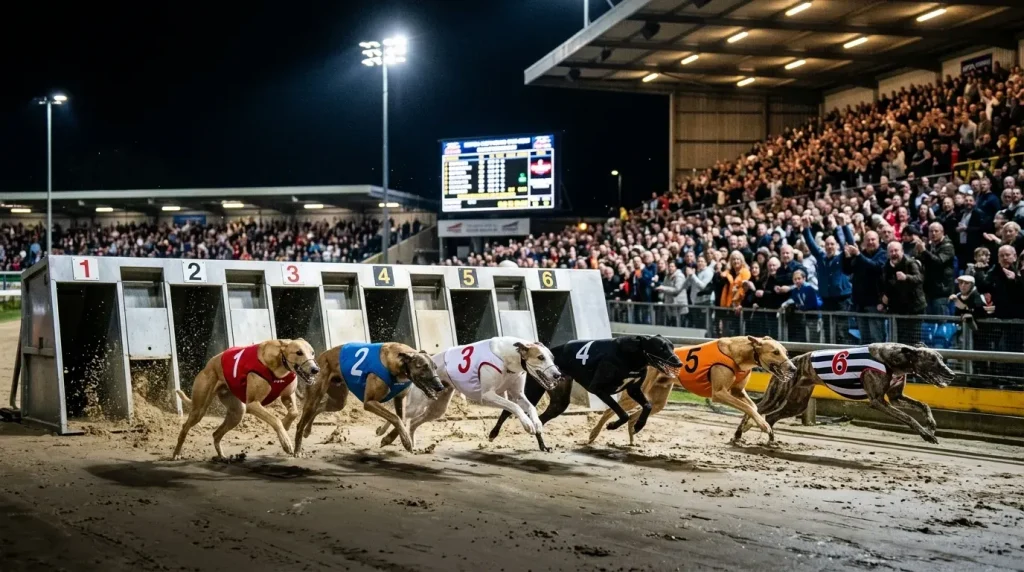
The English Greyhound Derby is the single biggest event in UK greyhound racing — the competition that draws the best dogs, the largest prize money and the widest public attention the sport receives in any given year. The winner collects £175,000, the largest purse in British greyhound racing, and the title carries a prestige that no other race can match. For the dogs and trainers who compete, the Derby is the pinnacle. For the betting public, it is the one greyhound event that breaks through into mainstream sporting consciousness.
Oxford Stadium does not host the Derby, but the connection between the two is closer than the geography might suggest. Trainers who campaign dogs at Oxford use the track as a development and preparation venue for higher-level competition, and the skills that Oxford’s sprint and standard distances test — early pace, trap craft, bend negotiation — are the same skills that a Derby contender needs to succeed at the national level.
A Trophy Since 1927 — Derby History and Format
The first English Greyhound Derby was held in 1927, just one year after the inaugural licensed greyhound meeting at Belle Vue. The competition began at White City Stadium in London and remained there for decades before a series of venue changes that mirrored the sport’s broader trajectory of contraction. Wimbledon hosted the Derby for many years after White City closed, then Wimbledon itself closed, and the event moved to Nottingham before settling at Towcester and eventually its current host venue.
The format follows a knockout structure. The competition begins with heats — typically 8 to 12 first-round races over the standard distance — and progresses through quarter-finals and semi-finals to a six-dog final. Each round eliminates the slower dogs, so the final represents the six fastest and most consistent performers from the entire entry. The structure mirrors that of a major tennis tournament: depth of field in the early rounds, drama as the contenders thin out, and a winner-takes-all showpiece at the end.
The prize money reflects the event’s status. The 2026 Derby offered £175,000 to the winner, with the total prize fund reaching approximately £350,000 across all rounds. This makes the Derby by far the richest race in UK greyhound racing — the next-tier events offer a fraction of that purse, and even Category One competitions like Oxford’s Sandy Lane Sprint carry prize money that is modest by comparison.
The 2026 Derby was won by Droopys Plunge at odds of 10/1, a result that underlined the competitive depth of the event. Favourites do not always win the Derby — the knockout format, the six-dog final and the pressure of the occasion all contribute to an event where upsets are part of the narrative. The betting market for the Derby attracts significantly more volume than any regular meeting, and the media coverage reaches an audience that may not follow greyhound racing at any other time of the year.
The Derby’s sponsorship has been held by Star Sports in recent years, and the branding — “The Star Sports English Greyhound Derby” — is the most visible corporate partnership in the sport. The sponsorship brings promotional support, broadcast enhancements and a profile that helps the event compete for attention in a crowded sporting calendar.
Recent Derby Winners — The Dogs That Made History
The Derby roll of honour reads as a history of the sport’s elite. Each winner represents the best dog in the country over the standard distance in a given year, and the names that appear on the trophy carry a resonance that extends beyond the greyhound community.
Droopys Plunge, the 2026 champion, arrived at the final as a live outsider rather than the market leader. The 10/1 starting price suggested the betting public did not consider it the most likely winner, yet its performance through the heats and semi-finals had demonstrated the consistency and pace needed to compete at the highest level. The victory at double-digit odds made it one of the more dramatic Derby results in recent memory and reminded punters that the event’s unpredictability is part of its appeal.
Previous winners have included dogs whose names became synonymous with greyhound racing excellence. The Derby has been won by front-runners who led from trap to line and by closers who produced devastating finishing efforts. It has been won by dogs from small kennels and by dogs from major training operations. The common thread is not pedigree or price tag but the ability to perform at the absolute highest level under the most intense scrutiny.
UK greyhound racing distributes over £15.7 million in total prize money annually. The Derby’s £350,000 fund represents approximately 2% of that total but accounts for a disproportionate share of the sport’s public profile. A Derby winner’s career is defined by the event — it is the achievement that trainers, owners and breeders aspire to above all others, and the financial reward is complemented by the reputational value that a Derby title confers on the connections.
The Oxford Connection — From Sandy Lane to Derby Heats
Oxford does not host Derby heats, but the stadium plays a role in the broader competitive ecosystem from which Derby contenders emerge. Trainers based in the Oxford catchment — Oxfordshire, Berkshire, Wiltshire — use the track as a development venue, testing younger dogs over the sprint and standard distances to assess their speed, trap craft and temperament before entering them in higher-profile events at other tracks.
The 253-metre sprint at Oxford is a particularly useful proving ground for early pace, which is one of the critical attributes in a Derby heat. A dog that breaks sharply and negotiates Oxford’s tight first bend cleanly is demonstrating the kind of trap speed that translates well to the Derby format, where getting to the front early in a heat can be the difference between qualification and elimination. The Sandy Lane Sprint, now a Category One event, attracts dogs of genuine open-race quality, and a strong Sandy Lane performance is a legitimate form indicator for dogs subsequently entered in national competitions.
The flow of dogs between Oxford and Derby-level competition is not one-directional. Dogs that have been eliminated from Derby campaigns sometimes return to Oxford for lower-pressure graded racing, bringing form and experience from the highest level of the sport into the stadium’s regular fields. When this happens, the Oxford racecard for an ordinary Tuesday morning can feature a dog whose previous race was a Derby semi-final — an upgrade in class that, if you are paying attention, represents a clear betting opportunity.
The relationship between Oxford and the Derby is, ultimately, the relationship between a development track and a showpiece event. Oxford builds dogs, tests trainers and produces the form data that the sport’s competitive pipeline depends on. The Derby is where the best of that pipeline is showcased. Both need each other, even if they operate at different levels of public visibility.
The wider context is set out in our Oxford dogs results guide.
Oxford’s own big races are in the Sandy Lane and open races.
